
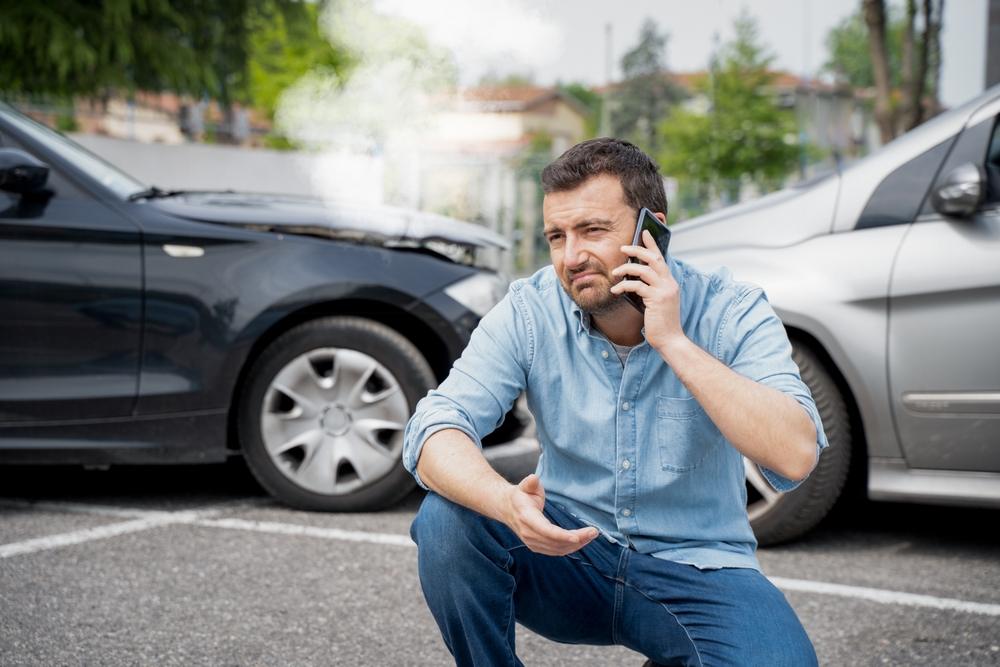
The driver who caused the accident may be responsible for damage to a rental car, but liability can depend on the circumstances of the crash and the agreements involved. Sometimes, the rental company may seek payment from the person who rented the vehicle.
The rental agreement can establish what happens when the vehicle is damaged. Insurance coverage can also affect who ultimately pays for the loss. If the rental car cannot be used while it is being repaired, the rental company may also make a claim for loss of use.
Heuser & Heuser, LLP, has protected the rights of injured accident victims since 1996. Our car accident lawyers in Colorado Springs can help you determine who may be responsible for the rental car after an accident. Call now for your free consultation and tell us what happened.
How Do Rental Car Accidents Work In Colorado?
When another driver causes the crash, that driver’s liability insurance is the first place the claim goes. Colorado requires every driver to carry liability coverage, and property damage coverage is part of it. The legal minimum for property damage is $15,000 in any one accident, under C.R.S. § 10-4-620. A current-model rental vehicle can be worth several times that. If the at-fault driver carries only the minimum, the money can run out before the rental company is made whole.
The rental company will not wait for that to resolve. It can bill you now under the agreement you signed at the counter and let the insurance claim catch up later.
That agreement also sets what you have to do after a crash, including when to report it, where the vehicle gets towed, and what the company is allowed to charge you for.
Those charges often reach past the repair estimate. In Koenig v. PurCo Fleet Services, the Colorado Supreme Court held that when a rental agreement allows loss of use damages “regardless of fleet utilization,” the company can recover the reasonable rental value of a substitute vehicle. It does not have to prove it lost a single booking. Many agreements also charge for diminished value and add an administrative fee.
Fault decides who ultimately pays. The rental agreement decides who pays first, and those are frequently two different people.
If you were in a crash in a rental car, Heuser & Heuser, L.L.P., can read the agreement, handle the claim against the at-fault driver’s insurer, and tell you which charges you actually owe.
For a free legal consultation, call (719) 520-9909
Can the Rental Company Make You Pay for the Damage?
Yes, and it happens routinely. The agreement you signed is a contract between you and the rental company, and it stands on its own no matter who caused the crash. The company can bill you first and go after the other driver’s insurer second, or leave that pursuit to you entirely.
A rental damage bill usually carries more than one line: the repair cost or a repair estimate, loss of use for the days the vehicle sits off the lot, diminished value, and an administrative fee. Your own auto policy, a collision damage waiver, or a credit card benefit may cover part of it. Each of those has conditions, and the company will keep expecting payment while you work out which one applies.
Whether a specific charge holds up depends on how the agreement is worded and what actually happened. Do not ignore the bill, and do not agree to the total before someone has read the charges against the agreement. Heuser & Heuser, L.L.P., can review the agreement, handle the claim against the at-fault driver’s insurer, and challenge charges the agreement does not support. Reach out if you need to hire a Colorado Springs car accident lawyer.
Does Your Own Insurance Cover the Rental Car?
Your personal auto policy usually follows you into a rental car. Which part of the policy responds is what decides whether the rental gets fixed. Liability coverage pays for harm you cause to other people and their property. Collision coverage pays to repair the vehicle you were driving, a rental included.
Colorado requires liability coverage and treats collision as optional, with minimums of $25,000 per person, $50,000 per accident, and $15,000 for property damage under C.R.S. § 10-4-620. A driver carrying the state minimum and nothing else may have no coverage that pays to repair the rental at all.
If your collision coverage does apply, you pay the deductible and your insurer covers the rest. You can often recover that deductible from the at-fault driver’s insurer, though it takes longer when fault is disputed. The extra charges are where policies get uneven.
Loss of use, diminished value, and administrative fees are the line items personal policies most often limit or decline, and that is how a renter ends up owing money while carrying what looks like full coverage.
One gap surprises people. Colorado’s uninsured and underinsured motorist coverage pays for bodily injury and death, not property damage, under C.R.S. § 10-4-609.
If an uninsured driver or a hit-and-run driver wrecks the rental you are in, that coverage will not repair the vehicle. Heuser & Heuser, L.L.P., can read your policy against the rental agreement and tell you which one is supposed to pay.
Click to contact our personal injury lawyers today
What if You Bought a Rental Car Collision Damage Waiver?
A collision damage waiver is not a policy that pays you. It is the rental company agreeing to give up its right to collect from you for damage to its own vehicle, written into the rental contract. No money changes hands under a waiver. The company stops billing you, provided the conditions in the agreement are satisfied.
Those conditions decide the outcome. Waivers commonly exclude damage connected to an unauthorized driver, driving under the influence, reckless driving, leaving the vehicle unlocked or the keys inside, taking the car outside an agreed area, or failing to report the crash and obtain a police report.
Many agreements also exclude damage that happens off paved roads. That one matters in Colorado, where a rental headed for a trailhead or a mountain pass can spend a significant amount of time on gravel roads.
A waiver reaches the rental vehicle and nothing beyond it. Injuries and property damage you cause to someone else fall to your own liability coverage or to coverage sold at the counter.
When a company says the waiver does not apply, it is pointing at one of those conditions. That question rarely arrives alone. If you were hurt in the crash, damage to the rental is one piece of a car accident claim that also covers medical treatment and lost wages.
Heuser & Heuser, L.L.P., handles injury claims from crashes in Colorado Springs and Pueblo, and the rental agreement and waiver get read as part of that work. Before you accept a damage bill or sign anything the company sends, have the agreement gone through with you.
Complete a Free Case Evaluation form now
What if the Rental Car Company Sold You Insurance?
Coverage sold at the rental counter is usually several separate products rather than one policy. A common stack includes supplemental liability coverage, personal accident coverage, personal effects coverage, and a collision damage waiver. Each carries its own terms, and each answers a different part of a crash.
Colorado puts boundaries on what the counter can sell. Under C.R.S. § 10-2-105(2)(g), rental company employees may offer this coverage without an insurance producer license only when it meets four conditions. Two of them matter after a wreck.
The coverage extends only to the parties to the rental agreement and other authorized drivers or occupants, and it applies only to damage during the rental period. If someone who was never added to the agreement was driving, that coverage may not reach the crash at all.
There is also a gap worth checking. Colorado requires insurers to offer uninsured motorist coverage with a personal auto policy, and C.R.S. § 10-4-609(1)(b) exempts rental agreements and rental companies from that requirement.
Coverage you bought at the counter may not include it. If an uninsured driver or a hit-and-run driver caused your crash, read the counter paperwork before assuming that protection is in place.
After a crash in a rental, three sources can be in play: the at-fault driver’s insurer, your own policy, and whatever you bought at the counter. Insurers dispute which one responds first, and those disputes run while you are the one receiving bills.
Heuser & Heuser, L.L.P., handles car accident injury claims in Colorado Springs and Pueblo, and working out which coverage answers is part of that. Bring the rental agreement, the counter paperwork, and your own policy.
Is the Rental Company Ever Responsible for an Accident?
The Graves Amendment (49 U.S.C. 30106) is a federal law that generally limits claims based solely on the rental company’s ownership of the vehicle. That rule does not eliminate every possible claim against a rental company.
The rental company may be liable in several circumstances. For instance:
- Inadequate maintenance may make a rental car company liable when a mechanical problem contributes to the crash.
- If the company knew or reasonably should have known about a dangerous defect but rented the vehicle anyway, it may face liability.
- Negligent entrustment may apply when a rental car company allows a particular driver to use its vehicle under circumstances that make doing so unreasonable.
- Providing a vehicle that is not reasonably safe to operate may expose a rental car company to liability when the unsafe condition contributes to the crash.
Heuser & Heuser, LLP, can evaluate whether circumstances support a claim against the rental company. Our team will advise on what steps you should take after a car accident.
Get Legal Help to Determine Who Is Responsible for a Rental Car After an Accident
The driver responsible for the accident is usually responsible for the rental car after the accident, but several factors can ultimately determine who is accountable. If you have been involved in an accident involving a rental car, it is important to know your rights.
Heuser & Heuser, LLP, has recovered hundreds of millions of dollars for accident victims in Colorado. Call today for a free consultation and tell us about your rental car crash incident.
Reviewed by Brennan Heuser | August 2026
Call or text (719) 520-9909 or complete a Free Case Evaluation form