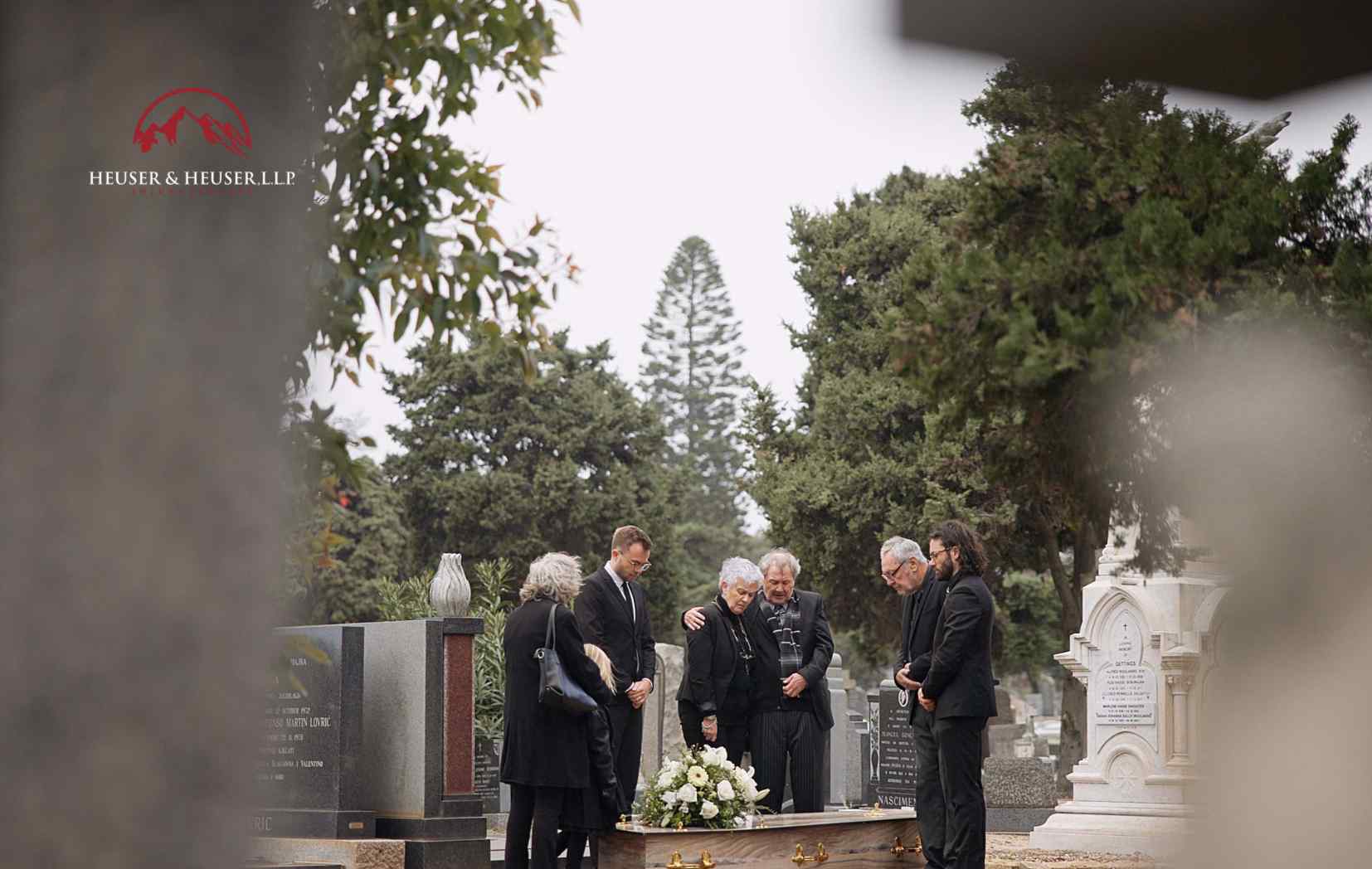
If your loved one died because of someone else’s actions, you may be able to file a wrongful death claim. This type of lawsuit can help cover funeral costs, medical bills, lost income, and other expenses your family now faces. It also gives you a way to hold the at-fault party accountable.
At Heuser & Heuser, we treat you like family. For nearly 30 years, we’ve helped Southern Colorado families get the financial support they need after a tragic loss. In this blog, we explain how a wrongful death suit works in Colorado, who can file, what kinds of compensation are available, and what to expect from the legal process.
What Counts as a Wrongful Death?
Losing someone you love is always difficult. But when someone else is at fault, the law gives your family a way to seek accountability.
A wrongful death happens when a person dies because of another person’s negligence or wrongful act. This could be a fatal car crash, a dangerous condition at work, or a failure to provide proper medical care.
These claims are filed in civil court. They don’t involve jail time. Instead, they focus on financial accountability and give your family a way to recover compensation for what you’ve lost.
For a free legal consultation, call (719) 520-9909
Who Can File a Wrongful Death Claim in Colorado?
Colorado law gives specific family members the right to file, but the rules depend on when the claim is filed and who survived the person who passed away.
Here’s how it works:
- The surviving spouse has exclusive standing, meaning they alone have the right to file. However, the spouse may choose to share this right with the decedent’s heirs (typically children or lineal descendants). If no surviving spouse exists, then the decedent’s heirs or a designated beneficiary can file.
- During the second year: Standing expands so that surviving heirs, the spouse, or the designated beneficiary can each file independently. Parents can file only in specific situations such as the wrongful death of an unmarried minor or an unmarried adult with no surviving heirs or designated beneficiary. Siblings (and their heirs, such as nieces and nephews) again can only file if no surviving spouse, children, or parents exist.
- A survival action may also be filed by the personal representative of the estate. This is separate from the wrongful death claim and focuses on damages the person could have claimed before they died such as medical bills or lost wages, and must be filed by the personal representative of the estate. It does not cover pain and suffering after death or future lost earnings.
These timelines are strict. If your family doesn’t file within the deadline, you could lose the right to seek compensation.
What Can Be Recovered in a Wrongful Death Claim?
A wrongful death claim can help your family recover both financial and emotional losses. The exact amount depends on the facts of the case, but here’s what compensation may include:
Financial losses:
- Medical expenses related to the final injury or illness
- Funeral and burial costs
- Lost income the person would have earned
- Lost insurance or retirement benefits
Emotional losses:
- Grief and emotional suffering
- Loss of companionship, guidance, or support
Solatium Damages:
Solatium damages offer a fixed amount of compensation as an alternative to proving specific emotional losses like grief or suffering. In Colorado, solatium damages are currently set at $135,990.
This option provides families with a straightforward way to recover damages without needing detailed evidence of emotional harm, making it useful in cases where emotional losses might be difficult to clearly document or quantify.
Colorado law (post-2024) sets a cap of $2,125,000 on noneconomic damages (such as grief and loss of companionship) for claims filed between January 1, 2025, and January 1, 2026. Solatium damages are fixed at $135,990 without future inflation adjustments.
Here’s how one local family used a wrongful death claim to regain stability after an unexpected loss.
Click to contact our personal injury lawyers today
After a Fatal Truck Crash Near Colorado Springs
Maria’s husband was killed when an 18-wheeler ran a red light just outside Colorado Springs. He was the main provider for their family. Suddenly, Maria was left to raise two children alone, with bills piling up and no clear way forward.
The trucking company denied responsibility and offered her a settlement that didn’t even cover the funeral. Maria decided to file a wrongful death claim. Her legal team reviewed crash reports, driver logs, and company policies. They discovered the driver had been on the road far too long without rest, in violation of federal rules.
With that evidence, Maria’s case settled before trial. She was able to stay in her home, cover her family’s expenses, and take time to focus on her children’s healing.
For families like Maria’s, a wrongful death claim isn’t just about compensation. It’s about accountability, peace of mind, and keeping your family steady after everything changes.
Complete a Free Case Evaluation form now
What to Expect from the Legal Process
Maria’s story is one example of how a wrongful death claim can help a family get answers and move forward. While every case is different, the legal process tends to follow a similar path.
Here’s what to expect if you decide to file a claim:
- Collecting evidence. Your legal team gathers key documents such as crash reports, medical records, and witness statements. In some cases, they may bring in experts like therapists or economists to help show the full impact of the loss.
- Filing the claim. A formal complaint is filed in civil court against the person or company responsible.
- Exchanging information. Both sides review each other’s evidence and take depositions. This step is called discovery.
- Working toward a settlement. Many wrongful death cases settle outside of court. Your attorney may negotiate with the other side to reach a fair agreement.
- Going to trial (if needed). If no agreement is reached, the case goes to trial. A judge or jury will decide who is at fault and how much compensation should be awarded.
How Long Do You Have to File a Wrongful Death Claim?
Not every family files right away. Sometimes, you’re focused on getting through the first days and weeks after a loss. But there is a deadline. Missing it could mean you lose your right to take legal action. In most cases, Colorado gives families two years from the date of death to file a wrongful death claim.
Waiting too long to act can make it harder to collect evidence or identify who is responsible. If you’re considering a claim, it’s important to speak with a wrongful death attorney as soon as possible.
The One Civil Action Rule
Colorado law allows only one wrongful death lawsuit per deceased individual, no matter how many defendants or family members might be involved. A settlement by one claimant is binding on all potential claimants. To protect everyone’s rights, it’s crucial for family members to coordinate closely when filing a claim to avoid unintentionally waiving anyone’s right to compensation.
What You’ll Need to Prove
To win a wrongful death claim in Colorado, you have to show that someone else’s actions caused your loved one’s death. This usually means proving negligence. In simple terms, the other person had a duty to be careful, they failed to do that, and their actions led to the death.
Take a fatal car crash as an example. If a driver runs a red light and causes a deadly accident, they may be considered negligent. They broke the law and put others in danger. That’s often enough to support a claim.
Your legal team will look at things like crash reports, medical records, and financial documents. They may also bring in experts to show how the loss affects your family—both emotionally and financially.
The person doesn’t have to mean harm to be held responsible. Many wrongful death claims are based on carelessness. But some involve reckless or even intentional actions. Felonious killings (murder, manslaughter) cases have no caps on damages. Either way, the claim gives your family a path to accountability and support moving forward.
Increased Role of Insurance
Higher damage caps in wrongful death claims have increased pressure on insurance companies to settle cases quickly. This can significantly influence how insurers approach negotiations, potentially leading to earlier settlements and affecting the overall strategy families should consider when pursuing a claim. Working with an experienced personal injury attorney in Colorado Springs can help families navigate these complex negotiations and maximize their compensation, making legal representation crucial in cases involving higher insurance considerations.
Talk to a Colorado Springs Law Firm That Puts Your Family First
If your loved one died because of someone else’s actions, you may have the right to file a wrongful death claim. At Heuser & Heuser, we care for you like family. Our lawyers for wrongful death handle the legal side so you can focus on your healing.
We’re Southern Colorado locals who have spent nearly 30 years helping families across Colorado Springs and Southern Colorado find peace of mind after a tragic loss. Whether the death involved a car crash, workplace accident, or another fatal incident, we’re here to guide you through it.
Your online search for “wrongful death attorneys near me” brought you to this blog. You’re in the right place. Take the next step and call (719) 520-9909 or fill out our confidential online form to schedule your free consultation. There’s no fee unless we recover money for your family.
Southern Colorado Locals Committed to Providing Clear Guidance to Pursue Better Health and Fair Compensation.
Copyright © 2025. Heuser & Heuser, L.L.P. All rights reserved.
The information in this blog post (“post”) is provided for general informational purposes only and may not reflect the current law in your jurisdiction. No information in this post should be construed as legal advice from the individual author or the law firm, nor is it intended to be a substitute for legal counsel on any subject matter. No reader of this post should act or refrain from acting based on any information included in or accessible through this post without seeking the appropriate legal or other professional advice on the particular facts and circumstances at issue from a lawyer licensed in the recipient’s state, country, or other appropriate licensing jurisdiction.
Heuser & Heuser, L.L.P.
625 North Cascade Ave, Suite 300
Colorado Springs, CO 80903
(719) 520-9909
https://heuserlaw.com/
Call or text (719) 520-9909 or complete a Free Case Evaluation form